
Last updated on November 22, 2026
The décolletage. The upper arms. The buttocks. Three areas where skin changes can tell a different story.
We often focus on facial ageing, but changes in skin quality and tissue structure don’t stop at the jawline.
The décolletage, upper arms and buttocks can develop changes in texture, firmness and contour over time.
For some people, these changes become more noticeable following weight loss. For others, they develop gradually with age, sun exposure or hormonal changes.
Although these concerns may appear similar, their underlying causes can be quite different.
Understanding those differences is the first step towards making informed decisions about body skin care.
The Décolletage: Delicate Skin, Visible Changes
The décolletage is one of the most frequently exposed areas of the body, yet it is often overlooked in daily skincare.
Over time, repeated ultraviolet exposure and natural changes in skin structure may contribute to:
- Fine lines and crepey-looking skin.
- Reduced elasticity.
- Uneven pigmentation.

- Changes in skin texture.
- Lines associated with sleeping positions and repeated skin folding.
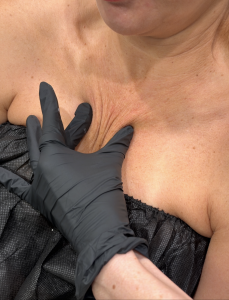
The skin of the upper chest has different characteristics from facial skin, so procedures and skincare routines should not automatically be approached in the same way.
Daily sun protection remains one of the most important measures for reducing further UV-related damage.
Upper Arms: Why Skin Can Become Crepey
The upper arms are a common area where changes in skin elasticity become noticeable.
Some people experience fine, crepey skin, while others notice loose tissue following significant weight loss. These are not necessarily the same concern.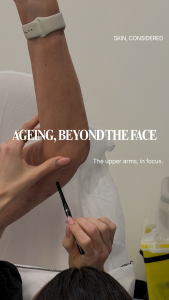
Skin texture may be influenced by hydration, skin thickness, collagen and elastin changes, while more substantial laxity can involve excess tissue and changes in underlying fat.
Common concerns include:
- Crepey skin texture.
- Reduced firmness.
- Fine lines and folds.
- Loose skin following weight changes.
- Changes in the appearance of the upper-arm contour.
It is important to distinguish mild skin-quality changes from significant excess skin, as their management and realistic outcomes may differ considerably.
Buttocks: More Than Just Volume
The appearance of the buttocks is influenced by several anatomical structures, including skin, connective tissue, fat distribution and underlying muscle.
Changes may become noticeable with ageing, weight fluctuations or natural differences in body composition.
Some common concerns include:
- Uneven skin texture.
- Cellulite and visible dimpling.
- Reduced skin firmness.

- Changes in contour.
- Skin creasing or laxity.
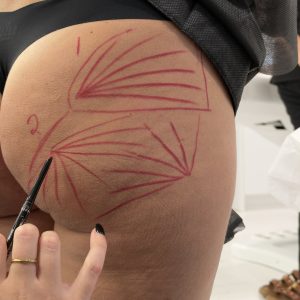
Cellulite, loose skin and changes in volume are three different concerns.
Cellulite is influenced by the relationship between connective tissue, fat and skin. It is extremely common and does not necessarily indicate poor skin health.
Changes in buttock contour may involve underlying muscle and fat distribution, while loose skin relates to tissue structure and elasticity.
Because these concerns have different causes, they should not be approached as though they are interchangeable.
What Happens to Collagen as We Age?
Collagen and elastin are important structural proteins within the skin.
Collagen contributes to skin strength, while elastin helps the skin stretch and return towards its original shape.
Over time, natural ageing and environmental factors can influence the skin’s structural composition.
Ultraviolet exposure, smoking, significant weight fluctuations and other biological processes may also contribute to visible changes.
However, reduced collagen is not responsible for every change in body appearance.
Fat distribution, muscle mass, connective tissue and the amount of excess skin are equally important considerations.
Skin Quality, Skin Laxity and Body Contour: What’s the Difference?
These terms are often used together, but they describe different concerns.
Skin quality refers to characteristics such as texture, hydration, surface smoothness and visible skin condition.
Skin laxity describes reduced firmness or increased looseness of the skin and surrounding tissues.
Body contour refers to the overall shape of an area, which is influenced by fat distribution, muscle and underlying anatomy.
A person may have concerns involving more than one of these factors.
Understanding which structures are involved is essential before considering any aesthetic procedure.
Can Skincare Improve Body Skin Quality?
Appropriate skincare can help maintain hydration, support the skin barrier and improve the visible appearance of some superficial concerns.
For the décolletage, consistent sun protection is particularly important.
Moisturisers and other appropriately selected skincare products may improve dryness and the appearance of fine lines.
However, topical skincare has limitations.
It cannot reliably correct substantial excess skin, significantly change underlying fat distribution or restore lost muscle mass.
For more pronounced concerns, further assessment may be appropriate.
Why Individual Assessment Matters
Body skin concerns require a different perspective from facial concerns.
The décolletage, upper arms and buttocks have different anatomical characteristics, and the same approach will not necessarily be suitable for each area.
A clinical consultation should consider:
- The main concern and how long it has been present.
- Medical history and relevant contraindications.
- Previous procedures or surgery.
- Recent or significant weight changes.
- Skin characteristics and underlying anatomy.
- Realistic expectations and treatment limitations.
- Potential risks, recovery requirements and alternatives.
- Whether medical or surgical referral is more appropriate.
Some concerns may be managed through skincare or lifestyle measures. Others may warrant further medical assessment.
No procedure is appropriate for every patient or every presentation.
Frequently Asked Questions
Why does the skin on my upper arms look crepey?
Crepey skin may be associated with changes in skin thickness, elasticity, hydration and ageing. Weight fluctuations and sun exposure can also contribute.
Can the appearance of the décolletage improve with skincare?
Appropriate moisturising skincare and sun protection may improve dryness and some superficial signs of skin ageing. More pronounced changes may require further assessment.
Is cellulite caused by collagen loss?
Not simply. Cellulite involves the interaction between fibrous connective tissue, skin and underlying fat. Its appearance is influenced by several factors.
Is loose skin the same as reduced skin firmness?
Not necessarily. Mild reductions in firmness and substantial excess skin are different concerns and may require different management approaches.
Does weight loss affect skin elasticity?
Significant weight loss can make existing skin laxity more noticeable. The degree of change varies with age, genetics, the amount of weight lost and individual skin characteristics.
Can exercise improve the appearance of the buttocks?
Resistance training may improve muscle strength and development, influencing overall contour. It does not directly correct every skin-texture or laxity concern.
Are non-surgical procedures suitable for every body area?
No. Suitability depends on the specific procedure, anatomical location, available evidence, medical history and individual circumstances. All procedures have potential risks and limitations.
A Considered Approach to Body Skin
Changes in body skin are individual.
The décolletage, upper arms and buttocks may share some visible characteristics, but the underlying causes are not always the same.
At Aesthetic Nurse Irina, consultations begin with understanding your concerns, reviewing relevant medical history and discussing realistic expectations.
The focus is on informed decisions rather than assuming a particular procedure is necessary.
Body Skin & Aesthetic Consultations | Gold Coast
Consultations are available in Broadbeach and Isle of Capri.
Consultation fee: $50, redeemable towards treatment or skincare products.
About the Author
Aesthetic Nurse Irina (RN) is a Registered Nurse practising in aesthetic medicine since 2017. Her clinical approach focuses on individual assessment, patient education and informed decision-making.
This article is intended for general education. It does not recommend a particular procedure or replace individual medical assessment. All aesthetic procedures have risks and limitations, and outcomes cannot be guaranteed.
Recents Posts

November 22, 2026

October 25, 2026
Summer Pigmentation on the Gold Coast: An ALASTIN Skincare Guide

October 13, 2026
Russian Lips Explained: Shape, Proportion and Questions to Ask

September 24, 2026
ALASTIN and Uneven Skin Tone: Your Skincare Questions Answered

September 4, 2026
New title
November 22, 2026
October 25, 2026
Summer Pigmentation on the Gold Coast: An ALASTIN Skincare Guide
October 13, 2026
Russian Lips Explained: Shape, Proportion and Questions to Ask
September 24, 2026
ALASTIN and Uneven Skin Tone: Your Skincare Questions Answered
September 4, 2026

 Online Marketing For Doctors